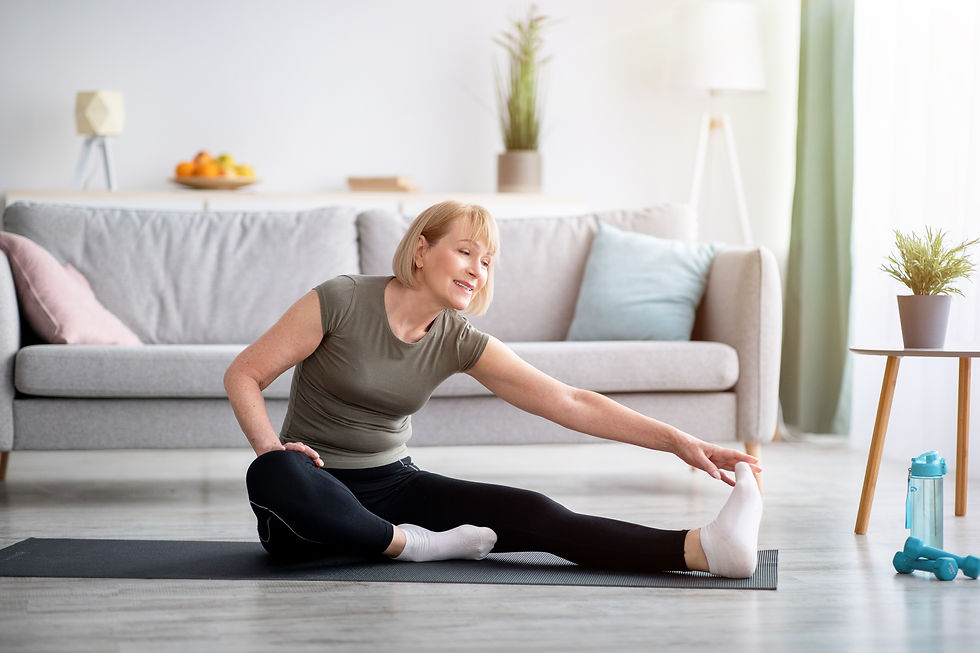
The Power of Muscle: Why Strength Is the New Youth
- Timothy Spellman

- Dec 7, 2025
- 11 min read
Updated: Dec 8, 2025

Why “Strong” Is The New “Young”
For a long time, youth was sold as smooth skin and a fast metabolism. In reality, what most people are craving as they get older is something very different:
Being able to get up from the floor without help
Carrying groceries without worrying about their back
Traveling without needing three days to recover
All of that is about muscle.
From about age 30 onward, adults lose an estimated 3 to 8 percent of their muscle mass per decade, with the rate of loss speeding up after about age 60. Volpi et al and Wiedmer et al both describe this as a major driver of frailty, slower metabolism, and loss of independence in later life.
The good news is that this loss is not a one way street. Resistance training and adequate protein can slow, stop, and in many cases reverse age related muscle loss, even for people in their 70s and 80s. Massini et al, Kim et al, and other researchers have repeatedly shown that muscle is one of the most “trainable” tissues across the lifespan.
For women in midlife and beyond, building and maintaining muscle is not about bodybuilding. It is about metabolism, posture, joint health, bone density, fall prevention, and ultimately, longevity.
This post will walk through what happens to muscle as we age, why strength is such a powerful form of “youth insurance,” and what practical strength work can look like at home.
What Happens To Muscle As We Age
Sarcopenia in plain language
The medical word for age related loss of muscle is “sarcopenia.” It refers to the progressive loss of muscle mass, strength, and function that tends to appear with aging, especially when people are inactive. Cleveland Clinic and others describe it as a key reason older adults may feel weaker, slower, and less steady on their feet over time.
Large reviews by von Haehling et al, Morley et al, and Meng et al estimate that sarcopenia affects roughly 10 to 20 percent of older adults worldwide, with prevalence climbing into the 40 percent range in adults over 80, and with slightly higher rates in women than in men in many cohorts.
In women specifically, hormonal shifts around menopause, lower average baseline muscle mass, and social patterns (less lifelong resistance training compared with men) can combine to create a faster slide in strength and function unless training is added. Sung et al report that in some samples of women over 65, sarcopenia rates surpass 20 percent.
Why this matters for real life
When muscle is lost, it is not just about looking “soft” or the number on the scale. Less muscle can mean:
Harder time getting up from chairs or the floor
More stress placed on joints like the knees and spine
Slower walking speed and reduced confidence on stairs
Higher risk of falls and fractures
Greater risk of developing chronic conditions tied to insulin resistance, such as type 2 diabetes and metabolic syndrome
Muscle is deeply involved in metabolism, posture, balance, and overall resilience. That is why rebuilding and preserving it is so central to staying independent.
Muscle And Metabolism: Your Built In “Glucose Sink”
Why muscle is a metabolic workhorse
Skeletal muscle is the single largest insulin sensitive organ in the body. Park et al and Kim et al describe that roughly 70 to 85 percent of insulin mediated glucose uptake happens in muscle tissue.
In simple terms, that means:
The more healthy muscle you have, the more space there is to store and use carbohydrate from food
The less muscle you have, the harder your body has to work to keep blood sugar in a healthy range
Several studies have linked lower muscle mass to higher rates of insulin resistance, metabolic syndrome, and type 2 diabetes. Kim et al and Haines et al found that people with more skeletal muscle tended to have better insulin sensitivity, even when controlling for fat mass. Chen et al and Zierath et al have highlighted similar patterns in more recent work, including in people at risk for or living with type 2 diabetes.
Wang et al conducted a 2025 meta analysis of resistance training in middle aged and older adults with type 2 diabetes and found consistent improvements in insulin sensitivity, muscle function, and markers of inflammation when people performed regular strength training.
When you hear that strength training “boosts metabolism,” this is what researchers like Wang et al are talking about. More and better functioning muscle tissue gives the body somewhere healthy to put the energy from food and makes it easier to maintain blood sugar control.
What this means for women in midlife
For women in their 50s, 60s, and 70s who may have noticed:
Weight gain, especially around the midsection
Stronger reactions to carbohydrate heavy meals
A sense that “my metabolism is not what it used to be”
Regular strength training, paired with adequate protein, is one of the most evidence supported tools available to improve metabolic health. It will not erase every factor involved in weight and health, but Kim et al, Park et al, and others suggest that maintaining or increasing relative muscle mass is strongly protective.
Muscle, Bone Density, And Fall Prevention
Muscle and bone talk to each other
Bone does not respond much to gentle, everyday movement. It is stimulated by impact and by muscles pulling on it. That is one reason resistance training is recommended for osteoporosis prevention and management.
Massini et al performed a meta analysis in 2022 that found resistance training protocols produced small but meaningful improvements or maintenance of bone mineral density in older adults, especially at the spine and hip. Xiaoya et al published a 2025 network meta analysis in postmenopausal women and reported that combinations of aerobic plus resistance training had some of the strongest effects on lumbar spine bone density. Bloch Ibenfeldt et al observed that a year of heavy resistance training in well functioning older adults positively influenced markers of bone formation.
Together, these findings suggest that when you load your muscles, you give your bones a reason to stay strong.
Strength, balance, and fewer falls
Falls are one of the leading causes of injury, loss of independence, and fracture in older adults. Sadaqa et al reviewed exercise trials and found that programs combining strength, balance, and aerobic training can reduce falls by as much as 50 percent in community dwelling older adults who keep up the training. Montero Odasso et al, in global fall prevention guidelines, similarly emphasize strength and balance exercise as key for people with gait or balance problems.
Other work by Nascimento et al and Simpkins et al shows that leg power, the ability to stand up quickly from a chair, and overall postural control are closely tied to fall risk.
When you strengthen muscles through the hips, thighs, and trunk, especially with movements that challenge balance in a safe environment, you are not just “toning the legs.” You are training your nervous system, posture, and reaction time in ways that help:
Catch yourself if you trip
Navigate stairs or uneven ground
Feel confident walking in crowded or unfamiliar spaces
This is one of the most concrete ways that strength is the new youth. It directly relates to balance, steady walking, and staying out of the hospital.
Muscle, Posture, And Joint Comfort
How muscle supports alignment
Posture is less about “standing up straight” and more about how your muscles share loads across the body.
When muscles in the hips, core, and upper back are strong and coordinated, they help you:
Maintain an upright position with less effort
Keep the head from drifting forward
Reduce extra strain on the knees, hips, and lower back
When these muscles are weak, the body tends to collapse into shapes that are harder on the joints, such as deep forward head posture or excessive rounding of the upper back. Over time, this can contribute to discomfort, reduced lung expansion, and greater energy cost even for simple tasks like walking.
Studies on falls and balance, such as those by Nascimento et al and Montero Odasso et al, repeatedly show that better lower body strength and postural control are associated with fewer falls and better functional scores.
Although posture is influenced by many factors, including pain and vision, maintaining strong muscles around the spine and hips is one of the most practical, trainable levers available.
Muscle And Longevity
Grip strength, power, and lifespan
Several large analyses have looked at simple strength measures like handgrip strength and sit to stand power and tracked how they relate to long term health.
López Bueno et al conducted a 2022 meta analysis of 48 studies including more than 3.1 million adults and found a clear, almost linear relationship. Higher grip strength was associated with lower risk of all cause mortality, as well as lower cancer and cardiovascular mortality. Wu et al previously reported similar findings, with lower grip strength linked to higher risks of overall death and major diseases. Chai et al, in a 2024 analysis, suggested that simple absolute grip strength is one of the most practical predictors of mortality risk in adults.
More recent work by Araujo et al indicates that relative muscle power, the ability to move body weight quickly, may be an even stronger predictor of mortality than raw strength in middle aged and older adults.
None of these studies say that grip strength causes longer life on its own, but they strongly suggest that people who maintain muscle and strength into later decades tend to have:
Greater cardiovascular fitness
Better metabolic health
More physical activity in daily life
In other words, strength shows up as a marker of overall vitality.
Women may gain especially large benefits
A 2024 analysis in the Journal of the American College of Cardiology suggested that women may gain larger reductions in mortality risk from a given amount of exercise compared with men. Women who did regular aerobic and strength training had marked reductions in both all cause and cardiovascular mortality, even at weekly exercise doses that were lower than those reported in men.
While that study did not focus exclusively on muscle mass, it adds to the picture painted by Wu et al, López Bueno et al, and others. For women in midlife and beyond, consistent strength training is not a cosmetic extra. It is a powerful health behavior linked with longer and better quality life.
What Strength Training Can Look Like At Home
You do not need a commercial gym to build and protect muscle. Many of the trials and programs included in studies by Massini et al, Xiaoya et al, Sadaqa et al, and others used very simple tools: adjustable dumbbells, resistance bands, body weight, and basic household equipment.
Below is a general picture of what evidence informed strength work can look like for adults over 50, especially women.
How often
Research and guideline groups commonly suggest:
Strength training at least 2 days per week for all major muscle groups
Many older adults benefit from 2 to 3 strength sessions per week, separated by at least one rest or light day between sessions for the same muscle group
In sarcopenia and osteoporosis trials that showed meaningful improvements, participants often trained for at least 10 to 12 weeks, and in some studies for many months, which is important to keep in mind. Results build over time rather than in a week or two. Wang et al and Bloch Ibenfeldt et al both highlight that consistent participation, not any single session, drives change.
What kinds of movements
Focusing on “big rock” movements helps you get the most out of each session. Many programs in the research use versions of:
Squats or sit to stands
Hip hinges, such as deadlift variations or bridges
Step ups or split squats for single leg strength and balance
Rows and pulls for the upper back
Pressing movements for the chest and shoulders
Carries or loaded holds for grip and core
Targeted calf and ankle work for balance and push off strength
These can all be adapted to:
Dumbbells
Resistance bands
Body weight with changes in leverage or tempo
Kim et al, López Bueno et al, and Sadaqa et al all underscore that improving strength of the lower body and grip has outsized payoff for mobility, falls, and mortality risk, so including some kind of leg and grip challenge is especially valuable.
How hard
In many successful trials in older adults, people were asked to work at roughly:
A moderate to challenging effort for 8 to 15 repetitions per set, or
Slower tempo sets where muscles are under tension for 45 to 75 seconds
The weight should feel manageable at the start of the set but challenging enough that the last few repetitions require focus and effort while still allowing good form. Bloch Ibenfeldt et al and Toien et al used heavy resistance training in older adults and found it to be safe and effective when supervised and progressed appropriately.
For home exercisers, especially those with joint concerns or medical conditions, working with a qualified professional who understands programming for older adults is ideal. That allows intensity to be adjusted safely as strength improves.
Putting It All Together: Strength As A “Youth Bank Account”
If you zoom out across the research from Kim et al, Park et al, Massini et al, Sadaqa et al, López Bueno et al, and many others, a clear picture emerges:
Muscle is a major organ of metabolic health
Strong muscles support posture, balance, and confident movement
Strength and power are linked with fewer falls, stronger bones, and lower mortality
Women in midlife and later may gain particularly large benefits from regular strength and aerobic training
Every time you challenge your muscles with safe, progressive resistance, you are making a deposit into a youth bank account. The payoff shows up not just in a mirror, but in your ability to:
Get off the floor without help
Travel, play with grandkids, and enjoy hobbies
Stay steady on your feet and independent longer
There is no perfect program that fits everyone, and no single study that has all the answers. But across many trials and reviews, including work by Kim et al, Wang et al, Xiaoya et al, Sadaqa et al, López Bueno et al, and Wu et al, one message is remarkably consistent. It is rarely too late to start building strength, and the benefits reach far beyond muscles alone.
References
Bloch Ibenfeldt M, et al. Heavy resistance training provides short term benefits on bone formation in well functioning older adults. Journal of Orthopaedic & Sports Physical Therapy. 2025.https://www.sciencedirect.com/science/article/pii/S8756328225000055
Chen W, et al. From muscle quality to metabolic health: investigating the role of skeletal muscle in metabolic syndrome. Diabetology & Metabolic Syndrome. 2025.https://dmsjournal.biomedcentral.com/articles/10.1186/s13098-025-01766-w
Haines MS, et al. Association between muscle mass and insulin sensitivity in young adults. Journal of Clinical Endocrinology and Metabolism. 2020.https://pmc.ncbi.nlm.nih.gov/articles/PMC7483278/
Kim G, et al. Impact of skeletal muscle mass on metabolic health. Endocrinology and Metabolism. 2020.https://www.e-enm.org/journal/view.php?doi=10.3803/enm.2020.35.1.1
López Bueno R, et al. Thresholds of handgrip strength for all cause, cancer, and cardiovascular mortality. Archives of Gerontology and Geriatrics. 2022.https://www.sciencedirect.com/science/article/pii/S1568163722002203
Massini DA, et al. Effect of resistance training on bone mineral density in older adults: a systematic review and meta analysis. Osteoporosis International. 2022.https://pubmed.ncbi.nlm.nih.gov/35742181/
Meng S, et al. The prevalence of sarcopenia and risk factors in the older adult population in China: a meta analysis. Frontiers in Public Health. 2024.https://www.frontiersin.org/articles/10.3389/fpubh.2024.1415398/full
Montero Odasso M, et al. World guidelines for falls prevention and management for older adults. Age and Ageing. 2022.https://academic.oup.com/ageing/article/51/9/afac205/6730755
Morley JE, et al. Prevalence, incidence, and clinical impact of sarcopenia. Journal of Cachexia, Sarcopenia and Muscle. 2014.https://link.springer.com/article/10.1007/s13539-014-0161-y
Nascimento MM, et al. Fall in older adults: considerations on balance regulation, postural strategies, and physical exercise. Geriatrics, Gerontology and Aging. 2019.https://ggaging.com/details/534/en-US/fall-in-older-adults--considerations-on-balance-regulation--postural-strategies--and-physical-exercise
Park BS, et al. Relative skeletal muscle mass is associated with metabolic syndrome and insulin resistance. Diabetes & Metabolism Journal. 2013.https://www.e-dmj.org/journal/view.php?doi=10.4093/dmj.2013.37.6.458
Sadaqa M, et al. Effectiveness of exercise interventions on fall prevention in older adults. Frontiers in Public Health. 2023.https://pmc.ncbi.nlm.nih.gov/articles/PMC10435089/
Volpi E, et al. Muscle tissue changes with aging. Current Opinion in Clinical Nutrition and Metabolic Care. 2004.https://pmc.ncbi.nlm.nih.gov/articles/PMC2804956/
Wang J, et al. Resistance training enhances metabolic and muscular outcomes in middle aged and older adults with type 2 diabetes: a systematic review and meta analysis. Diabetes Research and Clinical Practice. 2025.https://www.sciencedirect.com/science/article/abs/pii/S0168822725009556
Wiedmer P, et al. Sarcopenia – molecular mechanisms and open questions. Clinical Nutrition. 2021.https://www.sciencedirect.com/science/article/pii/S1568163720303354
Wu Y, et al. Association of grip strength with risk of all cause mortality, cardiovascular diseases, and cancer. Journal of the American Medical Directors Association. 2017.https://www.jamda.com/article/S1525-8610(17)30182-2/fulltext
Xiaoya L, et al. Effect of different types of exercise on bone mineral density in postmenopausal women. Scientific Reports. 2025.https://www.nature.com/articles/s41598-025-94510-3
Zierath JR, et al. A pathway to enhanced insulin sensitivity and skeletal muscle health with aging. Journal of Sport and Health Science. 2025.https://www.sciencedirect.com/science/article/pii/S2095254624001364